Month: October 2025

19_01_en.jpg

Is Eth Crypto A Good Investment Summarized Insights

When pondering the question is eth crypto a good investment, one must delve into the intricacies of Ethereum's blockchain technology and its applications. Understanding Ethereum goes beyond just its comparison with Bitcoin; it involves exploring its diverse use cases across various industries that showcase its potential.

Market trends play a crucial role in assessing Ethereum’s value, particularly as its historical price movements and trading volume reveal much about its volatility and market capitalization. Moreover, investors must weigh the risks and regulatory environment surrounding Ethereum, which can significantly impact their investment decisions.

Understanding Ethereum

Ethereum, launched in 2015, is a decentralized platform that enables developers to build and deploy smart contracts and decentralized applications (dApps). It operates on a blockchain, similar to Bitcoin, but with its unique features that allow for more complex functionalities. Unlike Bitcoin, which primarily serves as a digital currency, Ethereum's primary purpose is to serve as a platform for dApps and smart contracts, which automatically execute agreements when certain conditions are met.While Bitcoin is often viewed as a store of value or "digital gold," Ethereum is more of a versatile tool for developers.

Its programmable nature allows for an array of use cases across various industries. For instance, Ethereum is utilized in finance (DeFi), supply chain management, gaming, and even in digital art through non-fungible tokens (NFTs). This versatility makes Ethereum a strong contender in the cryptocurrency space.

Market Trends for Ethereum

How to Invest in Ethereum in 2021: Beginner's Guide to Investing in ETH

Currently, Ethereum is experiencing significant market trends that impact its value. Over the past year, Ethereum has shown considerable growth, influenced by increasing adoption and advancements in technology. With Ethereum 2.0's transition to proof-of-stake, many investors are optimistic about its potential for scalability and sustainability.Historically, Ethereum's price movements have been volatile, with notable peaks and troughs. For instance, in 2021, Ethereum reached an all-time high of over $4,800, reflecting a surge in interest and investment.

Its market capitalization consistently ranks second after Bitcoin, showcasing its dominance in the crypto market. Trading volume has also increased, indicating active participation from both retail and institutional investors.

Investment Risks and Considerations

THE BEST Ethereum (ETH) Stock to invest in!! Why you should buy HVBTF ...

Investing in Ethereum does come with several risks that potential investors should consider. The cryptocurrency market is highly volatile, and Ethereum is no exception. Sudden price fluctuations can result in significant gains or losses, making it crucial for investors to be aware of their risk tolerance.Additionally, the regulatory environment surrounding cryptocurrencies is still evolving. Governments worldwide are developing frameworks to regulate crypto assets, and any changes in regulations can significantly impact Ethereum's price and legality.

Investors must stay informed about these developments to make educated decisions.Common pitfalls include over-investing based on hype and failing to conduct thorough research. Many new investors are drawn to the market due to potential high returns but often lack a solid understanding of the underlying technology and market dynamics.

Comparisons with Other Cryptocurrencies

When comparing Ethereum's performance with other major cryptocurrencies, it becomes evident that Ethereum offers unique advantages. For instance, while Bitcoin is focused on being a digital currency, Ethereum's capability to support smart contracts and dApps sets it apart. This versatility can provide more opportunities for growth in various sectors.Compared to altcoins, Ethereum has established itself as a leader due to its extensive developer community and a robust ecosystem.

In the table below, we compare Ethereum with other popular cryptocurrencies to illustrate its unique features.

Cryptocurrency Launch Year Main Purpose Consensus Mechanism
Ethereum 2015 Smart contracts, dApps Proof-of-Stake (Ethereum 2.0)
Bitcoin 2009 Digital currency Proof-of-Work
Cardano 2017 Smart contracts, dApps Proof-of-Stake

Future Predictions for Ethereum

Ethereum and Cryptocurrency Investing Concept Editorial Photography ...

Experts are optimistic about Ethereum's future, especially with the ongoing developments in its technology. The transition to Ethereum 2.0, which aims to enhance scalability and reduce energy consumption, is a significant milestone that could positively impact its value. Predictions suggest that as more developers adopt the platform for various applications, Ethereum's utility and demand will continue to grow.Upcoming technological advancements, such as sharding and improvements to the protocol, are expected to further bolster Ethereum's position in the market.

Major events on the Ethereum roadmap, including the full implementation of Ethereum 2.0, are highly anticipated by investors and could signal a new era of growth for the platform.

Portfolio Diversification Strategies

Including Ethereum in an investment portfolio can enhance diversification. Investors should consider strategies that balance their exposure to crypto assets by allocating a portion of their portfolio to Ethereum while maintaining investments in traditional assets like stocks and bonds. A common approach is a balanced asset allocation model where investors might hold 5-10% of their portfolio in Ethereum and other cryptocurrencies.Diversification is crucial in cryptocurrency investments due to the market's inherent volatility.

By spreading their investments across different assets, investors can mitigate risks and potentially capitalize on Ethereum's growth while protecting against downturns in other areas.

Resources and Tools for Investors

For those looking to invest in Ethereum, several reputable platforms facilitate trading. Popular exchanges like Coinbase, Binance, and Kraken offer user-friendly interfaces and robust security measures for buying and selling Ethereum.Tracking Ethereum's price and market performance can be accomplished through various tools and websites, such as CoinMarketCap and CoinGecko, which provide real-time data and analytics.Moreover, engaging with communities and forums like Reddit or Discord can offer valuable insights and discussions among Ethereum investors, enhancing understanding and investment strategies.

Conclusion

In summary, while Ethereum presents exciting investment opportunities due to its technological advancements and market trends, it's essential to approach it with caution. By diversifying portfolios and staying informed about future predictions, investors can make more informed choices when considering whether Ethereum is the right fit for their investment strategy.

Helpful Answers

What are the main advantages of investing in Ethereum?

Investing in Ethereum offers potential for high returns due to its innovative technology, active development community, and various use cases.

How does Ethereum’s volatility compare to Bitcoin?

Ethereum tends to exhibit higher volatility than Bitcoin, which can lead to both significant gains and losses for investors.

What should investors be wary of when investing in Ethereum?

Investors should be cautious of market speculation, regulatory changes, and the potential for technological vulnerabilities.

Are there reputable platforms for trading Ethereum?

Yes, platforms like Coinbase, Binance, and Kraken are widely regarded as reputable options for trading Ethereum.

How can one track Ethereum’s market performance effectively?

Investors can use tools like CoinMarketCap or CoinGecko to monitor Ethereum's price, market cap, and trading volume in real-time.

20-Bitcoin-vs-Ethereum_-A-Simple-Explanation-for-Beginners.png

Difference Between Ethereum And Bitcoin Explained

As difference between ethereum and bitcoin takes center stage, this opening passage beckons readers into a world crafted with knowledge, ensuring a reading experience that is both absorbing and distinctly original.

Bitcoin and Ethereum are two titans of the cryptocurrency realm, each with its unique characteristics and purpose. While Bitcoin is often seen as digital gold, a store of value, Ethereum introduces a revolutionary platform for decentralized applications, enabling smart contracts that expand its utility far beyond mere transactions.

Overview of Bitcoin and Ethereum

Bitcoin vs Ethereum: A Comparative Analysis | Coins.ph Academy

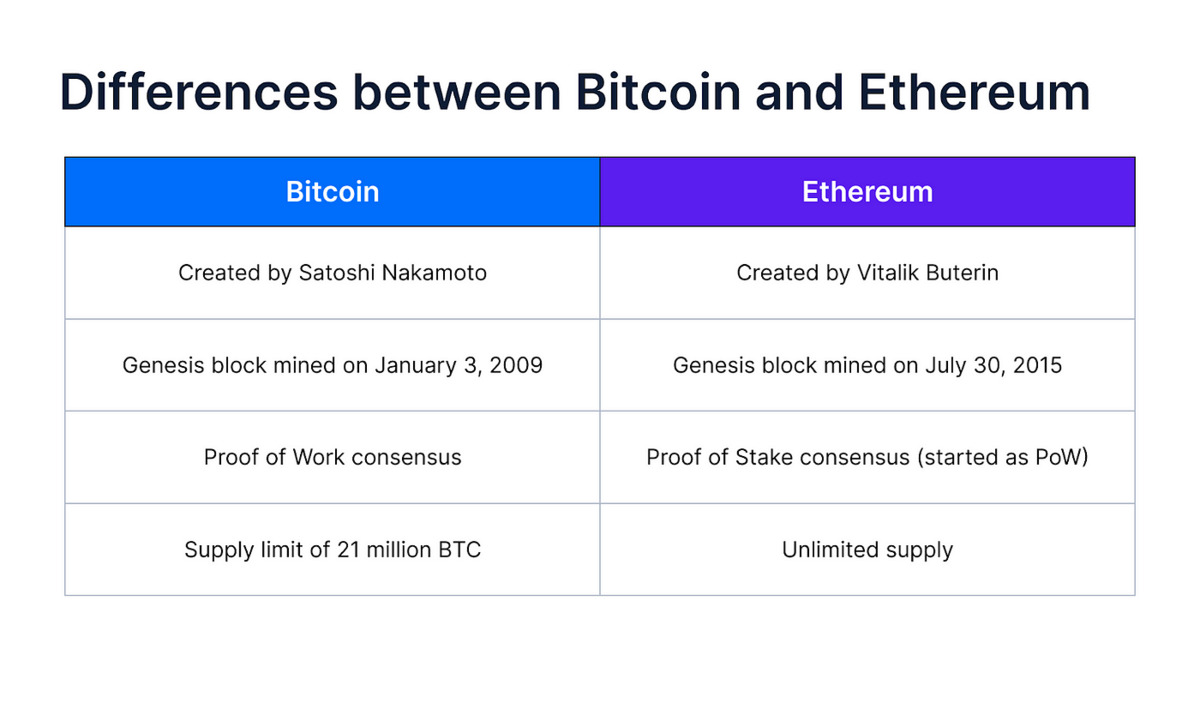
Bitcoin and Ethereum are two of the most prominent cryptocurrencies in the digital economy today. Both have distinct origins and purposes that cater to different aspects of blockchain technology. Bitcoin, introduced in 2009 by an anonymous entity known as Satoshi Nakamoto, was the first cryptocurrency and was created as a decentralized digital currency to facilitate peer-to-peer transactions without the need for a trusted intermediary.

On the other hand, Ethereum, proposed in late 2013 by Vitalik Buterin and launched in 2015, extends the blockchain concept beyond just currency. It allows developers to build decentralized applications (dApps) using smart contracts, which are self-executing contracts with the agreement directly written into code.Historically, Bitcoin paved the way for the cryptocurrency market, gaining significant traction after its initial coin offering (ICO) and subsequent adoption by various online merchants.

Ethereum quickly followed, capturing interest due to its innovative approach to programmable blockchain technology. The primary purpose of Bitcoin is to serve as a digital gold and a store of value, while Ethereum aims to be a platform for decentralized applications and smart contracts, expanding the functionality of blockchain technology.

Technology and Architecture

The blockchain architectures of Bitcoin and Ethereum demonstrate key differences that reflect their distinct purposes. Bitcoin operates on a straightforward design focused on secure and fast transaction processing. It uses a UTXO (Unspent Transaction Output) model which tracks the ownership of Bitcoin. Conversely, Ethereum utilizes an account-based model, allowing for more complex transactions involving smart contracts.Both cryptocurrencies employ unique consensus mechanisms to validate transactions.

Bitcoin relies on the Proof of Work (PoW) algorithm, which requires significant computational power to solve cryptographic puzzles. Ethereum initially operated on PoW as well but has transitioned to Proof of Stake (PoS), which allows users to validate transactions based on the number of coins they hold and are willing to “stake” as collateral.When it comes to transaction speeds and scalability, Bitcoin typically processes transactions every 10 minutes, with a maximum of around 3 to 7 transactions per second.

Ethereum, on the other hand, aims for faster transaction times, averaging around 15 seconds per block, but the actual speed can vary based on network congestion and gas fees.

Use Cases and Applications

Bitcoin vs Ethereum - A Comparative Analysis between BTC and ETH

The use cases for Bitcoin and Ethereum highlight their roles within the cryptocurrency ecosystem. Bitcoin is primarily used as a digital currency for transactions and a store of value, often referred to as "digital gold." It is utilized for remittances, online purchases, and as an investment asset.Ethereum's versatility enables a wide range of applications to be built on its platform.

From decentralized finance (DeFi) applications that allow users to lend, borrow, and earn interest on their crypto holdings, to non-fungible tokens (NFTs) that represent ownership of unique digital assets, Ethereum's smart contracts facilitate diverse use cases.For instance, Bitcoin transactions often involve straightforward exchanges of value, while Ethereum's smart contracts enable complex agreements, such as automatically executing trades on decentralized exchanges (DEXs) or creating decentralized autonomous organizations (DAOs) that govern themselves through community voting.

Economic Models and Supply

Bitcoin has a capped supply limit of 21 million coins, a feature designed to create scarcity and potentially increase value over time. In contrast, Ethereum does not have a fixed supply cap, allowing for a more flexible issuance model that can adapt to network needs. This difference influences the economic incentives for miners as well; Bitcoin's miners are rewarded with newly minted coins and transaction fees, while Ethereum's transition to PoS will change rewards to include staking incentives.The value of both cryptocurrencies is heavily influenced by supply and demand dynamics.

Bitcoin's fixed supply creates upward pressure on its price during periods of increased demand, while Ethereum's supply model can expand to accommodate greater use, but its value is influenced by transaction fees and network activity.

Community and Governance

The governance structures of Bitcoin and Ethereum reflect their community philosophies. Bitcoin's development is led by a decentralized group of contributors with no formal governance structure, relying on consensus and community agreement for upgrades and changes. Significant proposals often emerge from community discussions, with notable upgrades like Taproot enhancing privacy and smart contract functionality.Ethereum's governance is more centralized, with the Ethereum Foundation and key developers playing a significant role in decision-making processes.

The transition to Proof of Stake, known as Ethereum 2.0, is one of the most significant developments in the Ethereum community, aiming to enhance scalability and sustainability.Community-led initiatives are also present in both ecosystems, such as Bitcoin's adoption within institutional investment sectors and Ethereum’s growing platform for decentralized applications, showcasing the commitment of their communities toward respective missions.

Security and Risks

Bitcoin and Ethereum both implement robust security features, though their approaches differ. Bitcoin's security is rooted in its extensive network of miners and the substantial computational power required to execute attacks. Conversely, Ethereum's security will evolve with its shift to PoS, where the economic stake of validators provides an incentive to act honestly.Investing in both cryptocurrencies carries inherent risks, including market volatility, regulatory scrutiny, and technology-related vulnerabilities.

Common attacks, such as double spending or 51% attacks, pose significant threats to both networks, although they are more challenging to execute on Bitcoin due to its larger network.

Future Trends

The future of Bitcoin and Ethereum is poised for significant developments, shaped by technological advancements and market dynamics. Bitcoin may see further acceptance as a legitimate asset class, especially among institutional investors looking for a hedge against inflation. Ethereum is expected to continue expanding its ecosystem, with the potential for enhanced scalability and reduced transaction costs post-Ethereum 2.0.Emerging trends in the cryptocurrency market, such as increased adoption of DeFi and NFTs, could further influence the trajectories of both cryptocurrencies.

However, challenges such as regulatory uncertainties and competition from other blockchain platforms remain critical factors that could impact their future growth and adoption.

Closure

PPT - Difference between Bitcoin and Ethereum PowerPoint Presentation ...

In summary, understanding the difference between Ethereum and Bitcoin not only enhances your knowledge of the cryptocurrency landscape but also aids in making informed investment decisions. As both continue to evolve, their distinct characteristics will shape their paths in the digital economy.

FAQ Section

What is the main difference in purpose between Bitcoin and Ethereum?

Bitcoin primarily serves as a digital currency and store of value, while Ethereum focuses on enabling smart contracts and decentralized applications.

Which has a fixed supply, Bitcoin or Ethereum?

Bitcoin has a fixed supply limit of 21 million coins, whereas Ethereum does not have a capped supply.

How do transaction speeds compare between Bitcoin and Ethereum?

Ethereum generally offers faster transaction speeds than Bitcoin, making it more suitable for applications requiring quick processing.

What consensus mechanisms do Bitcoin and Ethereum use?

Bitcoin uses a proof of work mechanism, while Ethereum is transitioning to proof of stake, which is expected to improve its energy efficiency.

Are Bitcoin and Ethereum equally secure?

Both have robust security measures, but their different architectures and consensus mechanisms present unique vulnerabilities and strengths.

eth btc yahoo Exploring the Dynamics of Cryptocurrencies

eth btc yahoo sets the stage for this enthralling narrative, offering readers a glimpse into a story that is rich in detail and brimming with originality from the outset. In the world of cryptocurrencies, Ethereum and Bitcoin stand out as titans, each with distinct functionalities and a robust historical backdrop. This exploration delves into their unique characteristics, market trends, technological frameworks, and the evolving regulatory landscape that shapes their future.

Overview of Eth and BTC

The cryptocurrency landscape has been primarily dominated by Bitcoin (BTC) and Ethereum (ETH) since their inception. This article provides a comparative analysis of both, exploring their core functionalities and historical development.

Comparison of Ethereum and Bitcoin

Bitcoin, launched in 2009, is the world's first decentralized digital currency, often referred to as "digital gold" due to its limited supply and commodity-like characteristics. Ethereum, introduced in 2015, extends the capabilities of blockchain technology by enabling smart contracts and decentralized applications (dApps). While Bitcoin primarily serves as a medium of exchange and a store of value, Ethereum's platform allows developers to create and deploy a wide range of applications, making it more versatile.

Core Functionalities of Eth and BTC

  • Bitcoin’s primary function is as a peer-to-peer payment system, allowing users to send and receive funds without intermediaries.
  • Ethereum enables the creation of smart contracts, self-executing agreements with the terms directly written into code, facilitating complex transactions and automation.
  • Both platforms are secured by their respective blockchain technologies but serve distinct purposes within the cryptocurrency ecosystem.

Historical Context of the Development of Eth and BTC

Bitcoin was created by an anonymous person or group known as Satoshi Nakamoto, aiming to provide a decentralized alternative to traditional financial systems. Ethereum was proposed by Vitalik Buterin after his realization that Bitcoin's scripting language was limited. The launch of Ethereum introduced innovative features like the Ethereum Virtual Machine (EVM), which allows for greater flexibility in programming and deploying applications.

Market Trends for Eth and BTC

The cryptocurrency market has seen significant volatility in recent years, particularly for Bitcoin and Ethereum. Understanding market trends is essential for investors and enthusiasts alike.

Recent Market Trends for Ethereum and Bitcoin

In recent months, Bitcoin has experienced a surge in price driven by increased institutional adoption and interest from retail investors. Ethereum, on the other hand, has gained traction due to the rise of decentralized finance (DeFi) and non-fungible tokens (NFTs), which utilize its blockchain.

Impact of Global Events on Prices of Eth and BTC

Global economic events, such as inflation concerns, regulatory news, and market sentiment shifts, have directly impacted the prices of both cryptocurrencies. For example, announcements from central banks regarding interest rates can lead to fluctuations in market confidence, influencing the trading behavior of participants.

Trading Volume Fluctuations of Both Cryptocurrencies

Statistics reveal that Bitcoin's trading volume often spikes during bull markets, while Ethereum's volume has increased significantly as DeFi protocols gain popularity. On average, Bitcoin maintains a higher daily trading volume compared to Ethereum, but ETH's growth rate in trading activity has been notable.

Technological Differences

Understanding the technological differences between Ethereum and Bitcoin is crucial for grasping their unique advantages and applications.

Technological Framework Behind Eth and BTC

  • Bitcoin operates on a proof-of-work (PoW) consensus mechanism, requiring miners to validate transactions through computational power.
  • Ethereum is transitioning from PoW to a proof-of-stake (PoS) system, which aims to enhance scalability and reduce energy consumption.

Unique Features of Ethereum's Smart Contracts

Ethereum's smart contracts differentiate it from Bitcoin by enabling conditional transactions that automatically execute when predefined criteria are met. This technology underpins many of the dApps within the Ethereum ecosystem, facilitating innovation in various sectors.

Consensus Mechanisms Used by Eth and BTC

  • Bitcoin relies on PoW, which, while secure, can be resource-intensive and slow.
  • Ethereum's upcoming PoS aims to enhance transaction speeds and reduce environmental impact, making it more sustainable for future growth.

Investment Opportunities

Investors are increasingly looking into opportunities in both Bitcoin and Ethereum, each offering unique strategies and risk profiles.

Investment Strategies for Eth and BTC

  • Dollar-cost averaging (DCA) is a popular strategy where investors gradually accumulate assets over time to mitigate volatility.
  • Long-term holding (HODLing) is favored by many Bitcoin enthusiasts, viewing it as a hedge against inflation.
  • Ethereum investors often engage in staking, particularly as the network transitions to PoS.

Risk Factors in Investing in Ethereum versus Bitcoin

Bitcoin is often viewed as a safer asset due to its established market dominance, while Ethereum presents higher potential rewards due to its innovative technology and growing ecosystem. However, it also carries risks related to technological changes and competition from other blockchain platforms.

Future Value Projections for Both Cryptocurrencies

Analysts project that Bitcoin may reach new all-time highs as institutional interest continues to grow, while Ethereum's value could increase significantly with the expansion of DeFi and NFT markets. Both cryptocurrencies have shown resilience, indicating potential for future appreciation.

Regulatory Landscape

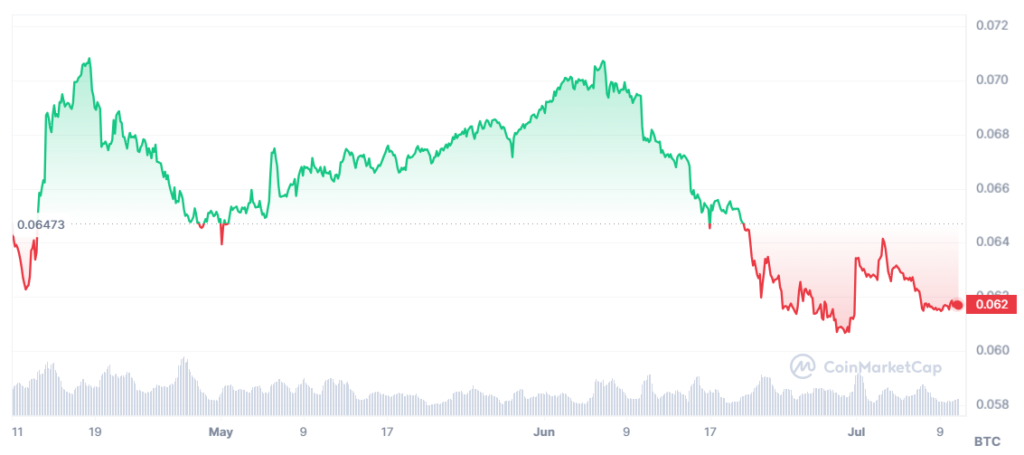
ETH BTC – Ethereum to Bitcoin Price Chart — TradingView

The regulatory environment surrounding cryptocurrencies is evolving, presenting challenges and opportunities for Bitcoin and Ethereum.

Regulatory Challenges Faced by Eth and BTC

Different countries have taken varying stances on cryptocurrencies, from outright bans to regulatory frameworks. The lack of a unified approach can create uncertainty for investors.

Governmental Policies Affecting Trading of Eth and BTC

Government regulations, such as tax laws and trading restrictions, can significantly influence market dynamics. Clear guidelines can promote adoption, while stringent regulations may hinder growth.

Recent Regulations Impacting Both Cryptocurrencies

Recent regulations in countries like the United States and China have created waves in the market. For instance, China’s crackdown on cryptocurrency mining and trading has led to significant price movements for both Bitcoin and Ethereum.

Use Cases and Applications

Beyond speculation, Bitcoin and Ethereum have real-world applications that highlight their utility.

Real-World Use Cases for Ethereum

Ethereum powers various applications, including:

  • Decentralized finance (DeFi) platforms that facilitate lending and borrowing without intermediaries.
  • Non-fungible tokens (NFTs) that allow digital ownership of unique assets.

Bitcoin as a Store of Value and Medium of Exchange

Bitcoin is increasingly seen as a store of value, akin to gold, while also being used for transactions in certain regions. Its limited supply and recognition as a digital asset contribute to its appeal.

Examples of Decentralized Applications Built on Ethereum

Prominent dApps include Uniswap for decentralized trading and Aave for lending protocols, showcasing Ethereum’s capacity for innovation.

Community and Ecosystem

The communities surrounding Bitcoin and Ethereum play a critical role in their development and adoption.

Communities Surrounding Ethereum and Bitcoin

Both communities are passionate and engaged, contributing to the ecosystems through development, advocacy, and education.

Role of Developers and Contributors

Developers are essential in advancing each platform. For Ethereum, the community continuously works on upgrades like Ethereum 2.0, while Bitcoin developers focus on improving scalability and security features.

Community-Driven Projects Related to Eth and BTC

Community initiatives such as Bitcoin meetups and Ethereum hackathons foster collaboration and innovation, driving the ecosystem forward.

Trading Platforms and Tools

A variety of trading platforms and tools are available for investors in both Bitcoin and Ethereum.

Trading Platforms for Ethereum and Bitcoin

Popular platforms include Binance, Coinbase, and Kraken, providing users with access to a wide range of cryptocurrencies and trading pairs.

Tools for Tracking Eth and BTC Market Trends

Investors use tools like CoinMarketCap and TradingView to analyze price trends and market data, helping them make informed decisions.

Setting Up Automated Trading Strategies

ETH BTC - Ethereum Bitcoin Fiyat Grafiği — TradingView

Automated trading strategies can be established using tools like trading bots, which allow users to execute trades based on predefined criteria without constant monitoring.

Media Coverage and Public Perception

The portrayal of Bitcoin and Ethereum in the media significantly influences public perception and market dynamics.

Portrayal of Ethereum and Bitcoin in Mainstream Media

Mainstream media coverage often emphasizes Bitcoin's volatility and Ethereum's innovation, shaping public understanding and investment interest.

Public Sentiment Regarding Both Cryptocurrencies

Public sentiment fluctuates based on market trends and news events, impacting trading behavior and overall market stability.

Media Coverage Effects on Market Dynamics

Positive or negative media coverage can lead to rapid price movements, highlighting the importance of responsible reporting in maintaining market integrity.

Future of Eth and BTC

Looking ahead, both Ethereum and Bitcoin face exciting prospects shaped by technological advancements and market trends.

Potential Future Developments in Ethereum and Bitcoin Ecosystems

Ethereum's transition to PoS and Bitcoin's potential integration with payment systems may redefine their roles in the global economy.

Emerging Trends Influencing Future of Both Cryptocurrencies

Ethereum (ETH) and Bitcoin (BTC) Prices Collapse After Stunning Rally ...

Trends such as the growing interest in DeFi, NFTs, and institutional adoption are poised to reshape the landscape for both cryptocurrencies.

Technological Advancements Shaping the Future

Advancements in blockchain technology, scalability solutions, and interoperability between cryptocurrencies could enhance their utility and adoption rates in the coming years.

Concluding Remarks

In conclusion, understanding eth btc yahoo provides valuable insights into the fascinating interplay between Ethereum and Bitcoin, highlighting their unique attributes, current market dynamics, and future potential. As both cryptocurrencies continue to evolve, staying informed about their developments will empower investors and enthusiasts alike to make informed decisions in this fast-paced digital economy.

General Inquiries

What is the main difference between Ethereum and Bitcoin?

Ethereum is designed for decentralized applications and smart contracts, while Bitcoin primarily serves as a digital currency and store of value.

How do I buy Ethereum or Bitcoin?

You can purchase Ethereum or Bitcoin through various cryptocurrency exchanges or trading platforms.

What are the risks of investing in cryptocurrencies?

The risks include market volatility, regulatory changes, and potential security vulnerabilities.

Can Ethereum replace Bitcoin in the future?

While Ethereum offers unique features, Bitcoin remains the first and most recognized cryptocurrency, making it unlikely to be completely replaced.

How do global events impact the prices of Eth and BTC?

Global events, such as regulatory announcements or economic shifts, can significantly influence investor sentiment and, consequently, the prices of both cryptocurrencies.

Bitcoin Ethereum Kurs Dollar Overview And Insights

Kicking off with bitcoin ethereum kurs dollar, the dynamic world of cryptocurrency has drawn increasing attention as investors seek alternatives to traditional financial avenues. Bitcoin and Ethereum, two of the most prominent digital currencies, have showcased fascinating price movements and technological advancements that are reshaping the financial landscape.

Understanding the fundamental differences between these two cryptocurrencies, their historical price trends, and the impact of current market dynamics is essential for anyone looking to navigate the complex world of digital assets.

Overview of Bitcoin and Ethereum

Bitcoin and Ethereum are two of the most recognized cryptocurrencies in the market today. While both operate on blockchain technology, they serve different purposes and have distinct features that set them apart. Bitcoin is primarily a digital currency designed for peer-to-peer transactions, while Ethereum is a decentralized platform that enables developers to build and deploy smart contracts and decentralized applications (DApps).Historically, the price trends of Bitcoin and Ethereum have demonstrated significant volatility.

Bitcoin, being the first cryptocurrency created in 2009, has seen its price skyrocket from mere cents to tens of thousands of dollars over the years. Ethereum, launched in 2015, has also experienced substantial price fluctuations, influenced by its growing adoption and technological advancements. The market capitalization of Bitcoin often dwarfs that of Ethereum, which plays a critical role in shaping the overall cryptocurrency market.

As of late 2023, Bitcoin remains the dominant player, with a market cap of over $500 billion, while Ethereum's market cap stands around $200 billion.

Current Market Trends

The current market trends for Bitcoin and Ethereum reveal that both cryptocurrencies are experiencing renewed interest from investors. As of now, Bitcoin is trading around $35,000, while Ethereum is valued at approximately $2,500. Recent geopolitical events, such as regulatory announcements and economic instability in various countries, have shown a direct impact on the courses of both cryptocurrencies. For instance, news of potential regulations in major economies has often led to fluctuations in their prices.Key market indicators that analysts monitor include trading volume, market sentiment, and network activity.

These factors can help predict future movements in Bitcoin and Ethereum prices. Increased trading volume often signifies heightened interest and can lead to price surges, while negative sentiments in the market can trigger sell-offs.

Investment Strategies

Bitcoin Prognose: BTC Entwicklung bis 2024, 2025 und 2030

Investing in Bitcoin and Ethereum requires careful planning and strategy. A comprehensive guide for potential investors includes understanding the fundamentals of each cryptocurrency, analyzing market trends, and setting clear investment goals. Investors should consider dollar-cost averaging, which involves investing a fixed amount regularly, minimizing the impact of volatility.Risk management is essential in cryptocurrency investments. Techniques such as setting stop-loss orders, diversifying the investment portfolio, and only allocating a small percentage of total assets to cryptocurrencies can mitigate potential losses.

Diversifying a portfolio with Bitcoin and Ethereum can offer benefits such as exposure to high-growth assets, but it also comes with drawbacks, including increased volatility and the risk of regulatory scrutiny.

Technology and Development

Bitcoin (BTC), Ethereum (ETH) Probing Multi-Week Highs, Alt-Coin Surge ...

The technological innovations behind Bitcoin and Ethereum play a crucial role in their value propositions. Bitcoin utilizes a proof-of-work consensus mechanism, ensuring security through mining. However, this method has raised concerns about energy consumption and scalability. In contrast, Ethereum is transitioning to a proof-of-stake model, which promises increased efficiency and scalability, allowing more transactions per second.Smart contracts are a significant innovation within the Ethereum network.

These self-executing contracts with the terms directly written into code enable trustless transactions and automation in various applications, from finance to supply chain management. Both cryptocurrencies face scalability issues, but proposed solutions vary. Bitcoin is exploring layer-two solutions like the Lightning Network, while Ethereum is implementing sharding and rollups to improve transaction speeds.

Regulatory Environment

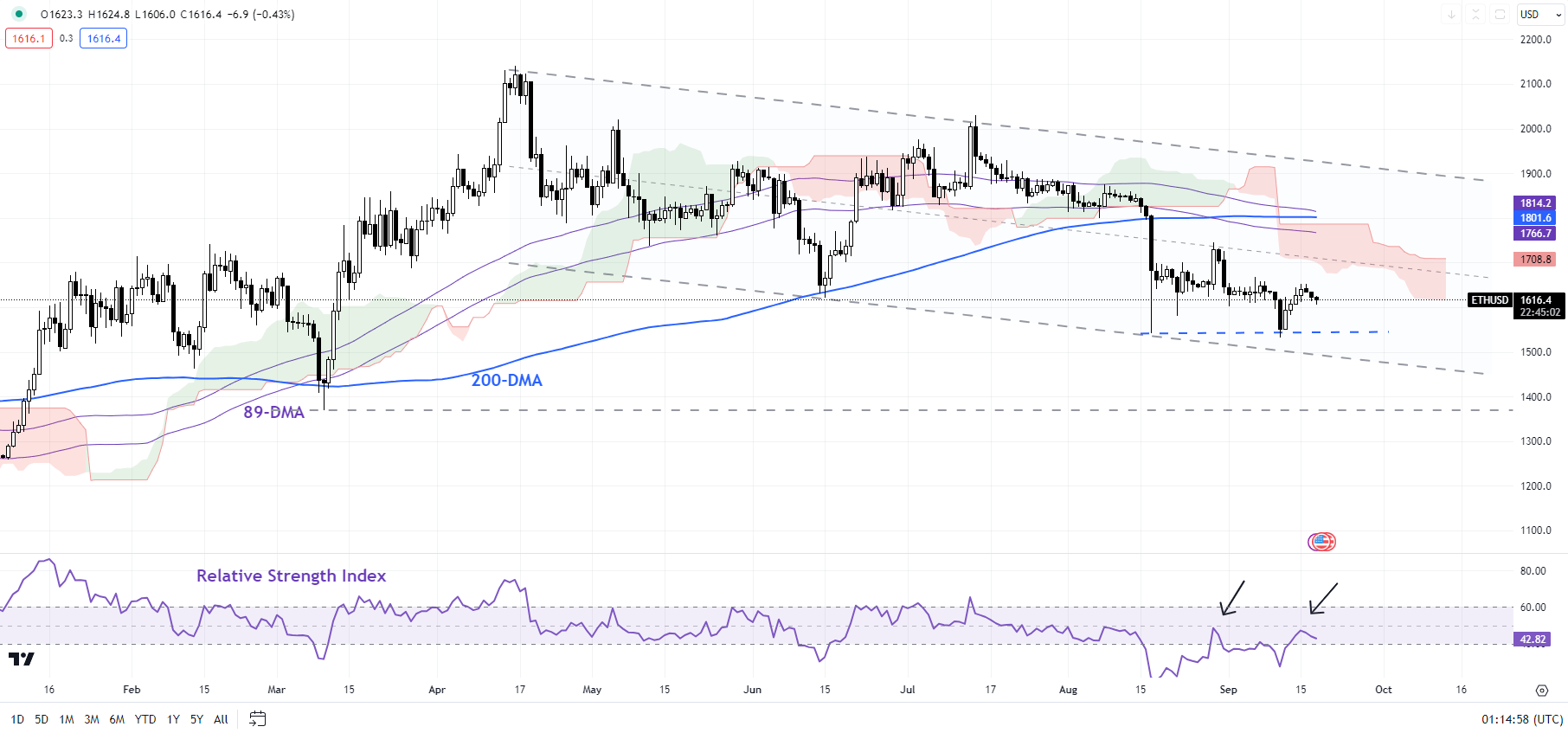
Bitcoin, Ethereum Suffer Crash But Support Holds

The regulatory environment surrounding Bitcoin and Ethereum has a profound impact on their trading dynamics. Countries around the world are either embracing or restricting the use of cryptocurrencies. Recent legal changes, such as the European Union's Markets in Crypto-Assets (MiCA) framework, aim to create a more structured environment for crypto assets, which could increase legitimacy and investor confidence.A list of countries embracing cryptocurrencies includes nations like El Salvador, which has adopted Bitcoin as legal tender, and Switzerland, known for its friendly crypto regulations.

On the other hand, countries like China have imposed strict bans on cryptocurrency trading and mining, highlighting the ongoing struggle between innovation and regulation in the crypto space.

Future Predictions

Expert opinions on the future value of Bitcoin and Ethereum suggest a mixed outlook. Some analysts predict that Bitcoin could reach $100,000 or even higher within the next few years, driven by institutional adoption and limited supply. Conversely, Ethereum's price trajectory is expected to benefit from its technological advancements and growing use cases in decentralized finance (DeFi) and non-fungible tokens (NFTs).Scenario analysis indicates that in a bull market, both cryptocurrencies could experience exponential growth, while in a bear market, they may face significant downward pressure.

Challenges such as regulatory changes, technological hurdles, and market competition could pose risks, but ample opportunities exist for innovation and mainstream adoption in the coming years.

Final Review

In conclusion, the evolving nature of bitcoin and ethereum kurs dollar offers both challenges and opportunities for investors and enthusiasts alike. By staying informed about market trends, investment strategies, and regulatory developments, individuals can make savvy decisions in this fast-paced environment. The journey into the world of cryptocurrencies may be intricate, but the potential rewards are undeniably enticing.

Common Queries

What is the main difference between Bitcoin and Ethereum?

Bitcoin is primarily a digital currency used for peer-to-peer transactions, while Ethereum is a platform that enables developers to create smart contracts and decentralized applications.

How do geopolitical events affect Bitcoin and Ethereum prices?

Geopolitical tensions can lead to increased volatility in cryptocurrency prices, as investors often turn to digital currencies as a safe haven during uncertain times.

What are the risks of investing in Bitcoin and Ethereum?

Investing in cryptocurrencies involves risks such as market volatility, regulatory changes, and security concerns, which can impact investment outcomes.

How can I secure my Bitcoin and Ethereum investments?

Utilizing hardware wallets, two-factor authentication, and keeping software updated can help secure your cryptocurrency investments from hacks and theft.

What are potential future trends for Bitcoin and Ethereum?

Future trends may include increased adoption of cryptocurrencies for everyday transactions, advancements in blockchain technology, and evolving regulatory landscapes.

What are ethereum altcoins and their significance

What are Ethereum altcoins? This intriguing question opens the door to a vibrant world within the blockchain ecosystem, highlighting the diverse projects that extend Ethereum's capabilities beyond its original framework. As Ethereum continues to evolve, countless altcoins have emerged, each contributing unique functionalities and potential to the digital currency landscape, all while building on the robust foundation that Ethereum has established.

By exploring the relationship between Ethereum and these altcoins, we gain insight into their development, types, and the significant role they play in various industries. From tokens to stablecoins, each altcoin offers distinct features and use cases, making them essential players in today's digital economy.

Introduction to Ethereum Altcoins

Ethereum is a decentralized platform that enables developers to build and deploy smart contracts and decentralized applications (dApps). Launched in 2015, it has become a cornerstone of the blockchain ecosystem, allowing for innovation beyond simple transactions, which Bitcoin primarily focuses on. Altcoins, or alternative cryptocurrencies to Bitcoin, are tokens that exist on various blockchain networks, including Ethereum. These altcoins can serve different purposes, such as providing utility, representing assets, or ensuring stability in value through mechanisms like collateralization.

Over the years, numerous Ethereum-based altcoins have emerged, significantly transforming the landscape of digital finance and broadening the use cases of blockchain technology.

Types of Ethereum Altcoins

Ethereum altcoins can be categorized into several types based on their functionalities. These include tokens, stablecoins, and utility tokens, each serving distinct purposes in the ecosystem.

  • Tokens: These are digital assets that represent various forms of utility within a project. For instance, Uniswap's UNI token allows holders to participate in governance decisions.
  • Stablecoins: Designed to maintain a stable value, these coins are pegged to a traditional asset. A prime example is DAI, which is backed by cryptocurrencies to ensure its value stability.
  • Utility Tokens: These tokens provide access to a product or service within a blockchain ecosystem. For example, Chainlink's LINK token is used to pay for data services on its decentralized oracle network.
Altcoin Type Use Case Market Cap (approx.)
Uniswap (UNI) Token Decentralized exchange governance $5 Billion
DAI Stablecoin Maintaining stable value $6 Billion
Chainlink (LINK) Utility Token Decentralized oracle service $8 Billion

Popular Ethereum Altcoins

Top 10 Most Promising Altcoins in 2021

Several Ethereum altcoins stand out in the market due to their unique features and applications. Among the most notable are Uniswap (UNI), Chainlink (LINK), and Aave (AAVE). Each of these altcoins offers distinct advantages that cater to the needs of users and developers alike.

  • Uniswap (UNI): As a leading decentralized exchange, Uniswap allows users to trade cryptocurrencies directly without intermediaries. Its governance token, UNI, empowers users to influence the protocol's future.
  • Chainlink (LINK): This altcoin acts as a bridge between smart contracts and real-world data, making it essential for projects that rely on external information.
  • Aave (AAVE): A decentralized lending protocol, Aave allows users to lend and borrow various cryptocurrencies, with unique features like flash loans enhancing its utility.

Use Cases of Ethereum Altcoins

Ethereum altcoins are not just digital assets; they play crucial roles in various sectors such as finance, gaming, and supply chain management.

  • Finance: Altcoins like AAVE facilitate decentralized lending and borrowing, disrupting traditional financial models.
  • Gaming: Altcoins such as Enjin Coin (ENJ) are utilized to create, manage, and trade in-game assets, enhancing player ownership.
  • Supply Chain: Projects like VeChain (VET) leverage altcoins to ensure transparency and traceability in the supply chain industry.

Investing in Ethereum Altcoins

Altcoin Season Soon? Quant Says This Ethereum Pattern Could Suggest So

Investing in Ethereum altcoins requires careful evaluation to mitigate risks while maximizing potential rewards. A strategic approach includes researching the utility, team, and market performance of altcoins before making any investment decision.

  • Evaluate the project’s whitepaper and roadmap for a clear understanding of its objectives.
  • Analyze market trends and the altcoin’s historical price performance.
  • Consider the community support and developer activity surrounding the project.

Purchasing Ethereum altcoins can be straightforward by following these steps:

  1. Create an account on a reputable cryptocurrency exchange.
  2. Complete the KYC (Know Your Customer) process if required.
  3. Deposit funds using fiat or cryptocurrency.
  4. Navigate to the altcoin market and place an order for your selected altcoin.

Future of Ethereum Altcoins

The future of Ethereum altcoins appears promising, with emerging trends and technologies shaping their evolution. Innovations such as Layer 2 solutions aim to address scalability issues, potentially enhancing transaction speeds and reducing costs on the Ethereum network.Predictions suggest that as more businesses adopt blockchain technology, the demand for Ethereum altcoins will increase, leading to further development and diversification. Notable examples include the growing interest in decentralized finance (DeFi) and non-fungible tokens (NFTs), which are likely to create new use cases and market opportunities.Regulatory changes are expected to impact the altcoin landscape significantly.

As governments establish clearer frameworks, the legitimacy and adoption of Ethereum altcoins may increase, attracting more institutional investors.

Community and Ecosystem of Ethereum Altcoins

The Ethereum community plays a vital role in supporting the development and growth of altcoins. Developers, enthusiasts, and users collaborate to enhance the ecosystem and foster innovation.Resources such as forums, GitHub repositories, and social media platforms facilitate interaction among community members, encouraging discussions about improvements and project developments. Community-driven initiatives, such as governance proposals and funding programs, are essential for sustaining the growth of altcoins.

Challenges Faced by Ethereum Altcoins

Despite their potential, Ethereum altcoins face several challenges, including scalability, security vulnerabilities, and regulatory hurdles. Developers are actively working on solutions to these issues, such as implementing layer 2 scaling solutions and enhancing protocol security.Some altcoins have successfully navigated these challenges. For example, Polygon (MATIC) has established itself as a leading layer 2 scaling solution, significantly improving transaction throughput and reducing fees on the Ethereum network.

Additionally, the steady development of Ethereum 2.0 aims to enhance the overall scalability and security of the Ethereum ecosystem.

Closure

Altcoins

In conclusion, understanding Ethereum altcoins is crucial for anyone looking to navigate the complexities of the cryptocurrency market. These digital assets not only enhance the Ethereum ecosystem but also offer varied investment opportunities and innovative applications across multiple sectors. As we look to the future, the growth and evolution of Ethereum altcoins will be key to shaping the landscape of blockchain technology and its integration into our daily lives.

Frequently Asked Questions

What are the risks of investing in Ethereum altcoins?

Investing in Ethereum altcoins can be risky due to market volatility, regulatory uncertainty, and the potential for technological issues.

How do I choose the right Ethereum altcoin to invest in?

Assess factors such as the project's purpose, development team, community support, and market performance before making a decision.

Can Ethereum altcoins be traded on all cryptocurrency exchanges?

No, not all exchanges support every Ethereum altcoin; it's important to check the listings of specific exchanges.

What distinguishes Ethereum altcoins from Bitcoin?

Ethereum altcoins often focus on specific use cases and functionalities, whereas Bitcoin primarily serves as a digital currency and store of value.

Are Ethereum altcoins decentralized?

Many Ethereum altcoins are built on the Ethereum network and aim for decentralization, but the level of decentralization can vary by project.

BTC-Grafik-Analiz.png

Bitcoin Ethereum Altcoins Analysis In The Crypto Realm

Kicking off with bitcoin ethereum altcoins analysis, the world of cryptocurrencies has become an increasingly vibrant and complex landscape, capturing the attention of investors and tech enthusiasts alike. As we delve into this analysis, we’ll explore the foundational principles of Bitcoin, the innovative features of Ethereum, and the myriad altcoins that populate the market.

From understanding how digital currencies function to examining market trends and investment strategies, this comprehensive overview will provide you with insights that are essential for navigating the evolving crypto space.

Overview of Bitcoin

COINTURK NEWS - Bitcoin, Blockchain and Cryptocurrency News and Analysis

Bitcoin, created in 2009 by an anonymous entity known as Satoshi Nakamoto, operates on a decentralized network utilizing blockchain technology. This digital currency is based on the principle of peer-to-peer transactions, eliminating the need for intermediaries like banks. The security of transactions is ensured through cryptographic techniques, making Bitcoin a pivotal player in the world of digital currencies.Bitcoin's historical development is marked by significant milestones.

Initially, it was a niche interest primarily among tech enthusiasts, but it gained wider recognition following its meteoric price rise in 2017. The first major milestone was the release of the Bitcoin whitepaper in 2008, followed by the mining of the first block, known as the genesis block, in January 2009. Over the years, Bitcoin has faced various challenges, including regulatory scrutiny and scalability issues, but has also seen increasing adoption by retailers and institutional investors.The advantages of using Bitcoin include its decentralization, which enhances security and reduces the risk of fraud.

Additionally, Bitcoin transactions can be conducted globally with relatively low fees. However, there are disadvantages, such as its high volatility and the potential for being used in illicit activities due to its pseudonymous nature.

Understanding Ethereum

Ethereum is a decentralized platform that enables developers to build and deploy smart contracts and decentralized applications (dApps). Launched in 2015 by Vitalik Buterin and a team of co-founders, Ethereum distinguishes itself from Bitcoin by providing a flexible programming environment that allows for complex transactions beyond simple currency exchanges. This functionality opens up a range of use cases, including decentralized finance (DeFi) and non-fungible tokens (NFTs).Smart contracts are self-executing contracts where the terms of the agreement are directly written into code.

They eliminate the need for intermediaries, thereby reducing costs and increasing efficiency. The implications of smart contracts are profound, as they enable trustless transactions and can automate various processes across industries.When comparing scalability solutions, Ethereum is actively working on improvements such as Ethereum 2.0, which aims to transition from a proof-of-work to a proof-of-stake consensus mechanism. This transition is expected to enhance transaction speed and reduce energy consumption.

In contrast, Bitcoin's scalability solutions primarily involve layer-two solutions like the Lightning Network, which aims to facilitate faster transactions without overloading the main blockchain.

Analyzing Altcoins

Altcoins, or alternatives to Bitcoin, have emerged to serve various niches within the cryptocurrency ecosystem. Some notable altcoins include Ethereum (ETH), Ripple (XRP), Litecoin (LTC), and Cardano (ADA). These cryptocurrencies can be categorized based on their use cases, such as payment solutions, privacy-focused transactions, and platform development.In the cryptocurrency space, utility tokens are designed to provide access to a product or service, while security tokens represent an investment in an underlying asset.

Understanding the differences between these two types is crucial for investors, as they come with different regulatory implications and use cases.Several factors influence the valuation of altcoins, including market sentiment, technological advancements, and adoption rates. Additionally, the overall performance of Bitcoin often impacts altcoin valuations, as Bitcoin is seen as a market leader.

Market Trends and Performance

Recent market trends indicate a growing interest in Bitcoin, Ethereum, and altcoins, with increased trading volumes and market capitalization. In 2023, Bitcoin reached new all-time highs, while Ethereum continued to expand its ecosystem with various DeFi projects. Key performance indicators to monitor in the cryptocurrency market include market capitalization, trading volume, and price volatility. Keeping an eye on these metrics helps investors gauge the health of the market.Here is a comparison of market capitalization and transaction volumes for major cryptocurrencies:

Cryptocurrency Market Capitalization (USD) Transaction Volume (24h)
Bitcoin (BTC) $800 Billion $30 Billion
Ethereum (ETH) $400 Billion $15 Billion
Ripple (XRP) $25 Billion $1 Billion
Litecoin (LTC) $10 Billion $500 Million

Investment Strategies

Bitcoin Chart Analysis || Altcoins Update - YouTube

Investing in Bitcoin, Ethereum, and altcoins requires a well-thought-out strategy. One effective approach is to adopt dollar-cost averaging, which involves regularly investing a fixed amount regardless of market conditions. This method mitigates the impact of volatility and helps in building a long-term position.Risk management techniques are essential to safeguard investments. Setting stop-loss orders and diversifying investments across different cryptocurrencies can help manage potential losses.

Additionally, investors should stay informed about market developments and adjust their strategies accordingly.Diversification within a cryptocurrency portfolio is crucial, as it helps spread risk. By investing in a mix of established cryptocurrencies and promising altcoins, investors can capitalize on growth opportunities while minimizing exposure to any single asset's downturn.

Regulatory Environment

The regulatory landscape surrounding Bitcoin and Ethereum is continually evolving. Various countries have adopted different approaches, from outright bans to supportive regulations that foster innovation within the cryptocurrency space. For instance, the United States has seen regulatory clarity through agencies like the SEC and the CFTC, which have provided guidelines for digital asset classification.Regulations significantly influence altcoin development and adoption.

For example, stricter regulations in certain jurisdictions can hinder the growth of new projects, while supportive frameworks can encourage innovation and investment.Notable regulatory actions include the European Union's proposed Markets in Crypto-Assets (MiCA) regulation, aimed at providing a comprehensive regulatory framework for cryptocurrencies. Such actions reflect the growing recognition of cryptocurrencies in the global financial system.

Future Outlook

Potential technological advancements that may influence Bitcoin and Ethereum include improvements in blockchain scalability and energy efficiency. For instance, Ethereum's transition to a proof-of-stake model is expected to reduce energy consumption and enhance transaction speeds, positioning it favorably for future growth.Altcoins are likely to play a significant role in the evolving cryptocurrency ecosystem. As more projects emerge that address specific challenges, such as privacy and interoperability, they will contribute to a more robust and diverse market.Based on current data, market trends in the coming years may be characterized by increased institutional adoption, the rise of decentralized finance, and greater regulatory clarity.

As the cryptocurrency market matures, investors can expect new opportunities and challenges that will shape the future landscape.

Concluding Remarks

Bitcoin Ethereum and Altcoins Technical Analysis || Bitcoin Next Move ...

In conclusion, the landscape of Bitcoin, Ethereum, and altcoins presents both opportunities and challenges for investors and users alike. By staying informed about market trends, regulatory changes, and technological advancements, you can make well-rounded decisions that align with your financial goals in this fast-paced environment.

User Queries

What is the main difference between Bitcoin and Ethereum?

Bitcoin is primarily a digital currency used for peer-to-peer transactions, while Ethereum is a decentralized platform that enables smart contracts and decentralized applications.

How do you evaluate the potential of an altcoin?

Evaluating an altcoin involves analyzing its use case, the technology behind it, market trends, team experience, and community support.

Are altcoins safer investments than Bitcoin?

Altcoins can be riskier than Bitcoin due to their lower market capitalization and higher volatility, making thorough research essential before investing.

What are utility tokens and security tokens?

Utility tokens provide access to a service or product, while security tokens represent ownership and are subject to regulatory securities laws.

How can I diversify my crypto portfolio?

Diversifying your crypto portfolio can be achieved by investing in a mix of established cryptocurrencies like Bitcoin and Ethereum, along with potential high-growth altcoins.